Uffizi highlights: the works to plan around
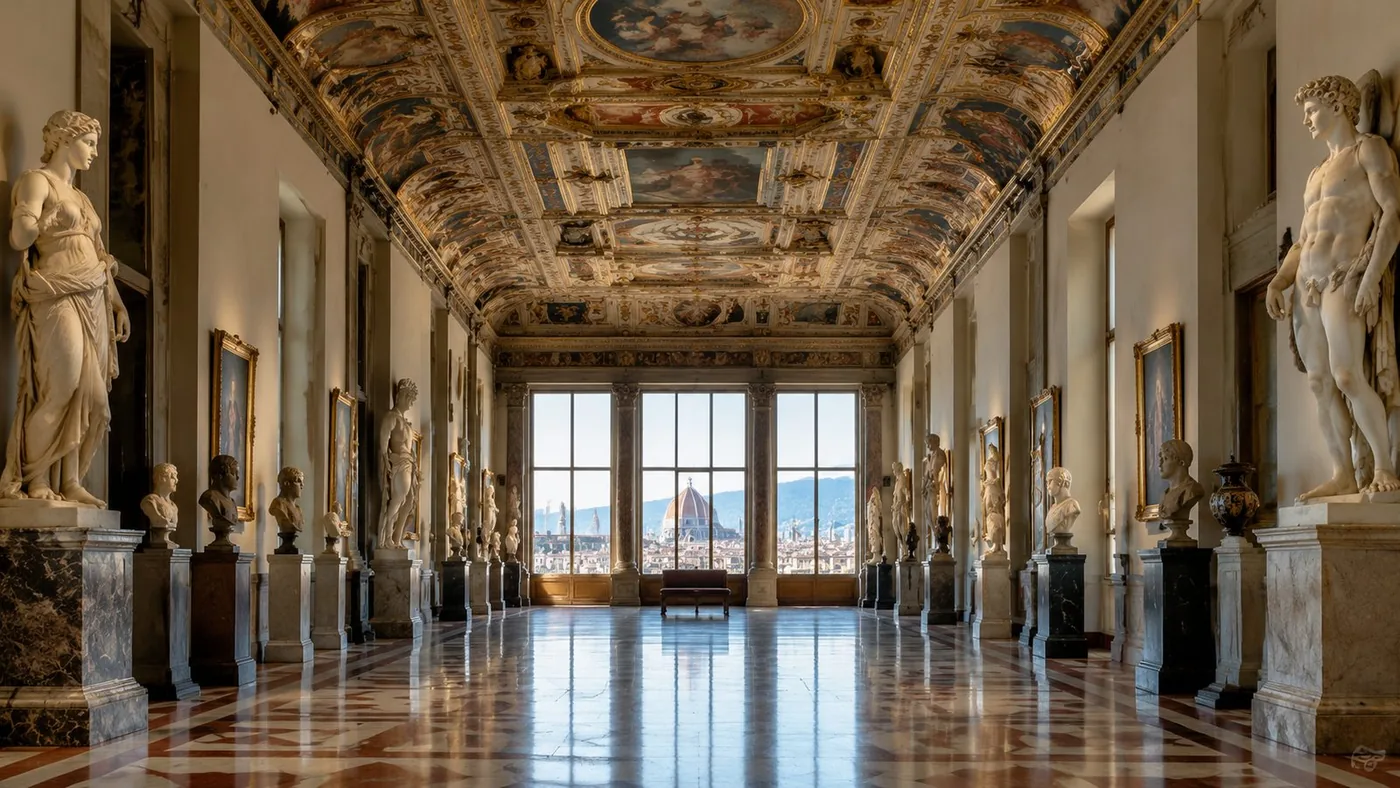
How the building works
Two floors, an east and a west corridor running the length of a courtyard, and rooms opening off them. The early Italian material comes first, Botticelli sits in the middle of the sweep, and the later collections and the twelve self-portrait rooms are on the first floor, which is also the floor the Vasari Corridor is entered from. We are not going to give you room numbers. The Uffizi rehangs, and a room number typed into a website one year is a wrong turn the next; the current plan is on uffizi.it.
The route, in order
- Giotto, Ognissanti Madonna — the start of the argument. Everything after this is a response to a painter who put weight into a gold-ground panel.
- Piero della Francesca, the Duke and Duchess of Urbino — two profiles that look like coins and behave like people.
- Botticelli, the Primavera and the Birth of Venus — the two everyone comes for, and the reason to give this stretch more time than you planned.
- Leonardo, the Annunciation and the unfinished Adoration of the Magi — the finished picture is the famous one and the unfinished one is the more interesting.
- Michelangelo, the Doni Tondo — a strange, muscular thing, and a painting by the man the world remembers as a sculptor.
- Titian, the Venus of Urbino — worth going out of your way for; check the current room on the gallery map when you arrive.
- Caravaggio, the Medusa and Bacchus — the shock at the end, on a painted shield and in a glass of wine held out towards you.
- The self-portrait rooms — twelve of them, on the first floor, and the reason the corridor is empty. More on what the corridor holds now.
Walk the list backwards if your slot is late in the day. The Botticelli rooms thin out as the afternoon goes on, and starting at Caravaggio means you meet them on the way out rather than on the way in.
Fewer works, read properly
The alternative to a sweep of the gallery is a deliberately narrow itinerary. Susan, from Canada, appreciated a guide who concentrated on a handful of important works instead of everything. Stefanie, from the United States, wanted technique, paint and light rather than names and dates. Jackie, also American, noticed her guide navigating crowded rooms to find the best sightline for each painting. That is what a capped-at-nine tour buys, and it is the opposite of value measured in rooms per hour. For a second visit to Florence it is usually the better trade. How the day fits together is on how long it takes, and the Accademia question is settled on Uffizi or Accademia.
Frequently asked questions
What is the most famous painting in the Uffizi?
Botticelli’s Birth of Venus, with his Primavera hanging near it. If you only have the attention for one room, that is the room, and it is the one everybody else has picked as well.
How many rooms does the Uffizi have?
We are not going to give a number, because there is no current figure we can stand behind and the gallery reorganises. What matters practically is the shape: two floors, a long east and west corridor around a courtyard, early Italian painting first, and the later collections and self-portrait rooms on the first floor.
Which room is the Birth of Venus in?
Room numbers change with each rehang, so we do not print them. The gallery publishes its current plan on uffizi.it, and the desk will tell you on the day.
Does a Vasari Corridor booking include the whole gallery?
The combined products cover timed entry to the Uffizi and the one-way corridor walk on a single reservation. What varies is whether a guide is attached and which booking option you choose; compare them on all tours, and check which days the gallery runs at all on opening days.